Palm Beach County Complex Work Injury Reconstruction
Before a Complex Work Injury Is Sent an Hour Away, Ask Whether the Expert Reconstructive Surgeon Is Already Here
Complex workplace injuries are not commodity repairs.
You do not send the totaled Ferrari to the lowest-bid body shop an hour away when the factory-trained collision specialist is already down the road.
When a Palm Beach County injured worker has exposed hardware, failed wound closure, nerve injury, vascular compromise, tissue loss, infection risk, or possible limb loss, the referral decision should be based on reconstructive expertise – not convenience, habit, or unexplained routing.
A surgeon may be authorized. A referral may be approved. But the real question is whether the injury is being matched to the right level of reconstructive skill.
If the expert reconstructive surgeon is already here, sending the patient away should be justified by the injury – not by cost containment.
This Is Not a Routine Workers’ Compensation Referral
This page is for serious workplace injuries involving:
- Exposed bone
- Exposed orthopedic hardware
- Failed wound closure
- Progressive wound breakdown
- Crush injury
- Degloving injury
- Severe soft tissue loss
- Tendon loss
- Peripheral nerve injury
- Motor or sensory deficit
- Vascular compromise
- Uncertain tissue perfusion
- Infection risk
- Possible amputation
- Failed prior reconstruction
- Functional decline after initial treatment
These injuries require more than an available appointment. They require judgment, infrastructure, sequencing, and a surgeon comfortable managing injuries where routine pathways have already reached their limit.
Going Farther Only Makes Sense When Farther Means Better
Patients appropriately travel for specialty care when the needed expertise is not available locally. That is not the issue.
Travel is appropriate when it brings the patient to a higher level of care. Travel is questionable when it moves the patient away from one.
We accept complex referrals from outside communities when advanced reconstruction is not available locally or when the injury requires escalation to a higher level of care. That is different from sending a Palm Beach County injured worker away when the necessary expert reconstruction is already available here.
Palm Beach County injured workers should not have to leave their own community unless the injury truly requires it.
For a complex work injury, distance can create real burden:
- More difficult follow-up
- Disrupted therapy coordination
- Delayed reassessment
- Transportation strain on the patient and family
- Fragmented communication between treating teams
- Less continuity if reconstruction fails or needs revision
Traveling farther may be appropriate when the farther option offers a clear clinical advantage. But when advanced local expertise exists, the reason for bypassing it should be clinical – not automatic, unexplained, or simply because that is where the referral was sent.
Authorized Does Not Always Mean Optimal
Workers’ compensation care often involves approved physicians, authorized referrals, and network pathways. Those terms matter.
But authorization does not automatically answer the most important clinical question: Is this injury being matched to the right reconstructive environment?
Authorized means approved. It does not always mean best matched.
A surgeon may be authorized. A referral may be administratively available. A pathway may be easy to activate. But complex reconstruction requires more than access. It requires the right match between injury severity, surgical capability, institutional infrastructure, and follow-up.
For high-consequence injuries, approved should not be confused with best suited.
You May Have a Say
Many injured workers do not realize they can ask questions when they are being redirected out of their own community for care.
You do not need to know the answer before asking the question.
If you are being sent outside Palm Beach County for a serious work injury, it is reasonable to ask:
- Why am I being sent an hour away?
- Is there a clinical reason local care is being bypassed?
- Does this injury require advanced reconstructive expertise?
- Does the proposed surgeon routinely manage this level of injury?
- Is this referral based on my injury pattern or on a network pathway?
- Will travel interfere with follow-up, wound checks, therapy, or continuity?
- What happens if the wound breaks down again?
- Are there local tertiary reconstructive options before accepting disability, hardware removal, amputation, or “nothing else can be done”?
You are allowed to ask. You are allowed to request local review. You are allowed to ask whether the referral decision is being made for the injury – or around the injury.
Local Expertise Should Not Be Bypassed Without a Clinical Reason
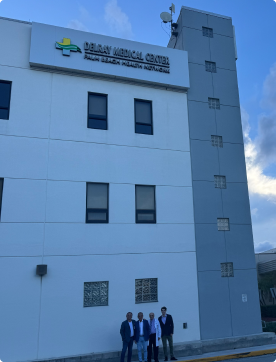
Palm Beach County has local Level I trauma-scale reconstructive infrastructure.
For severe workplace injuries originating in Delray Beach, Boca Raton, Boynton Beach, Lake Worth, West Palm Beach, and the surrounding region, local tertiary review should be considered before out-of-community redirection is treated as inevitable.
Out-of-community referral may be appropriate. But when the expert reconstructive surgeon is local, the reason for sending the patient away should be clinical.
Is the patient being sent away because the injury requires it – or because the pathway prefers it? That question matters.
When Routine Pathways Have Reached Their Limit
Our practice is focused on complex reconstructive problems where routine treatment has stalled, failed, or left major questions unanswered.
These cases may involve:
- Exposed hardware that will not stay covered
- Failed closure after initial surgery
- Progressive wound breakdown
- Infection risk around implants or fixation
- Threatened limb viability
- Nerve injury affecting function
- Vascular compromise or uncertain perfusion
- Failed prior reconstruction
- Possible amputation
- Persistent functional loss after initial treatment
This is not routine wound care. This is not generic soft-tissue management. This is advanced plastic and reconstructive trauma judgment applied to high-consequence injuries. Our comfort zone begins where routine reconstruction runs out of answers.
Network Access Is Not Reconstructive Capability
A referral pathway can be administratively available without being the best clinical match for a complex reconstructive injury.
Network access is not limb salvage. It is not nerve reconstruction. It is not hardware preservation. It is not staged soft-tissue reconstruction. It is not trauma-scale judgment.
Complex workplace injuries should be matched to the surgeon and system built for the injury – not merely the easiest route through the referral process.
More Than Wound Closure
A wound can be closed and still fail. A limb can survive and still be functionally useless. A patient can be transferred and still lose continuity.
Durable reconstruction may require:
- Staged debridement
- Infection-risk control
- Hardware preservation strategy
- Vascularized soft-tissue coverage
- Microsurgical free tissue transfer
- Peripheral nerve reconstruction
- Tendon reconstruction or transfer
- Perfusion assessment
- Orthopedic coordination
- Vascular surgery support
- Structured rehabilitation
- Longitudinal follow-up
The goal is not simply closing the skin. The goal is preserving structure, function, and future options.
Complex Workplace and Industrial Injury Reconstruction
High-energy occupational injuries are different.
Construction, industrial, transportation, agricultural, warehouse, and machinery-related trauma can produce severe crush injury, exposed hardware, nerve injury, tendon loss, vascular compromise, degloving, infection risk, and failed prior repair.
For injured workers, the goal is not simply getting through the next appointment. The goal is preserving function, reducing preventable deterioration, and progressing toward maximum medical improvement when biologically achievable.
When to Question an Out-of-Community Referral
Local review may be appropriate when a Palm Beach County injured worker is being sent outside the community despite available local tertiary reconstructive capability.
A review may address:
- Whether the injury requires advanced reconstruction
- Whether local trauma-scale resources are available
- Whether delay or distance may affect continuity
- Whether exposed hardware, nerve injury, vascular compromise, or tissue loss requires escalation
- Whether the proposed pathway preserves follow-up and rehabilitation coordination
- Whether additional reconstructive options remain before amputation or permanent disability is accepted
This is not a dispute over ordinary provider preference. It is a clinical review of whether injury complexity is being matched to the appropriate reconstructive environment.
For Attorneys, Case Managers, Adjusters, and Referring Physicians
The question is straightforward: Is there a clinical reason to bypass available local advanced reconstructive care?
If a Palm Beach County injured worker has a complex wound, exposed hardware, nerve injury, vascular compromise, threatened limb, failed reconstruction, or possible amputation, out-of-community redirection should be explainable on clinical grounds.
When the explanation is unclear, local review is appropriate. This protects the patient. It also protects the referral decision.
Professional Referral and Case Review
Complex Palm Beach County work injuries should be evaluated at the level of care the injury requires.
If the injury involves exposed hardware, limb-threatening tissue loss, failed reconstruction, nerve injury, vascular compromise, tendon loss, functional decline, or amputation risk, local tertiary reconstructive review may preserve options before they are lost.
For acute trauma transfer coordination: 855-952-7246